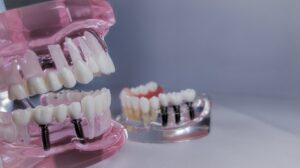

Periodontitis is an infection of the gums and the bone that support your teeth. It starts as gingivitis and can progress to destroy tissue and bone if untreated. Knowing what does periodontitis look like can help you spot problems early, get treatment, and protect your natural teeth. This guide explains common signs, how clinicians diagnose and treat the disease, and what to do if you live in Springfield, Missouri.
What Does Periodontitis Look Like in Springfield, Missouri?
Active periodontitis often looks like swollen, bright red or purplish gums that bleed easily. You may see deep pockets between teeth and gums, exposed tooth roots, or teeth that appear longer as gums recede. In advanced cases, teeth can feel loose or shift position. If you’re asking what does periodontitis look like in Springfield, Missouri, these visual cues and symptoms are common reasons to seek a specialist evaluation.
Early Signs to Watch For
Bleeding or tender gums
Gums that bleed when you brush or floss, or that feel sore, are early warning signs. These symptoms often mean plaque and bacteria are irritating the gum tissue.
Persistent bad breath and taste
A constant bad taste or bad breath that won’t go away with brushing can signal bacterial buildup below the gum line.
Gum recession or longer-looking teeth
When gums pull away from teeth, roots become exposed and teeth can look longer. This shows tissue loss and possible early bone loss.
Slight tooth looseness or shifting
Even a small change in how your teeth fit together or tiny movement can mean underlying support is weakening. Early follow-up can prevent further damage. If you notice any of these signs, call your dentist or a periodontist quickly for a proper exam.
Advanced Signs and Complications
Deep pockets and pus
Advanced disease creates deep periodontal pockets that trap bacteria. You might notice pus or drainage around the teeth.
Tooth mobility and drifting
Teeth that become loose, tilt, or shift are losing bone support. This often needs urgent care to avoid tooth loss.
Visible bone loss on X-rays
Bone loss may not be visible to the eye but shows clearly on dental X-rays or cone beam scans. Periodontitis also links to systemic conditions like diabetes and heart disease, so treating it promptly matters for overall health.
How Periodontitis Is Diagnosed and Treated
Clinical exam and periodontal probing
A periodontist measures pocket depths around each tooth and checks for bleeding, recession, and mobility.
Imaging and cone beam for bone evaluation
X-rays and cone beam scans show bone levels and help plan treatment precisely.
Non-surgical options: scaling, root planing, antibiotics, LANAP® laser
Deep cleanings (scaling and root planing), targeted antibiotics, and minimally invasive laser therapy like LANAP® can control infection and promote healing.
Surgical options and regenerative care
When needed, surgical treatment and regenerative procedures can rebuild lost tissue and bone. If teeth can’t be saved, guided implant placement is a restorative option to replace missing teeth predictably.
How to Protect Your Gum Health
Brush twice daily with a soft brush, floss or use interdental cleaners daily, and see your dentist for regular cleanings. Quit tobacco and keep diabetes well controlled—both reduce your risk of periodontitis. If routine care isn’t enough, a referral to a periodontist will include a focused exam, imaging, and a clear treatment plan.
About Care and Specialists
Dr. Leo A. Tokarczyk, DDS is a Springfield, Missouri periodontist who treats complex gum disease with a conservative, minimally invasive approach. His practice uses technologies such as the Chao Pinhole® Surgical Technique, LANAP® laser therapy, cone beam imaging, and guided implant placement to restore long-term oral health.
If You’re Asking “what does periodontitis look like” and Live in Springfield, Missouri — Next Steps
If you see signs listed here, call a dental office right away. Bring any recent X-rays, a list of medications, and notes on symptoms. Early evaluation leads to less invasive care and better outcomes. Springfield specialists offer conservative, modern options to control disease and protect your smile.